
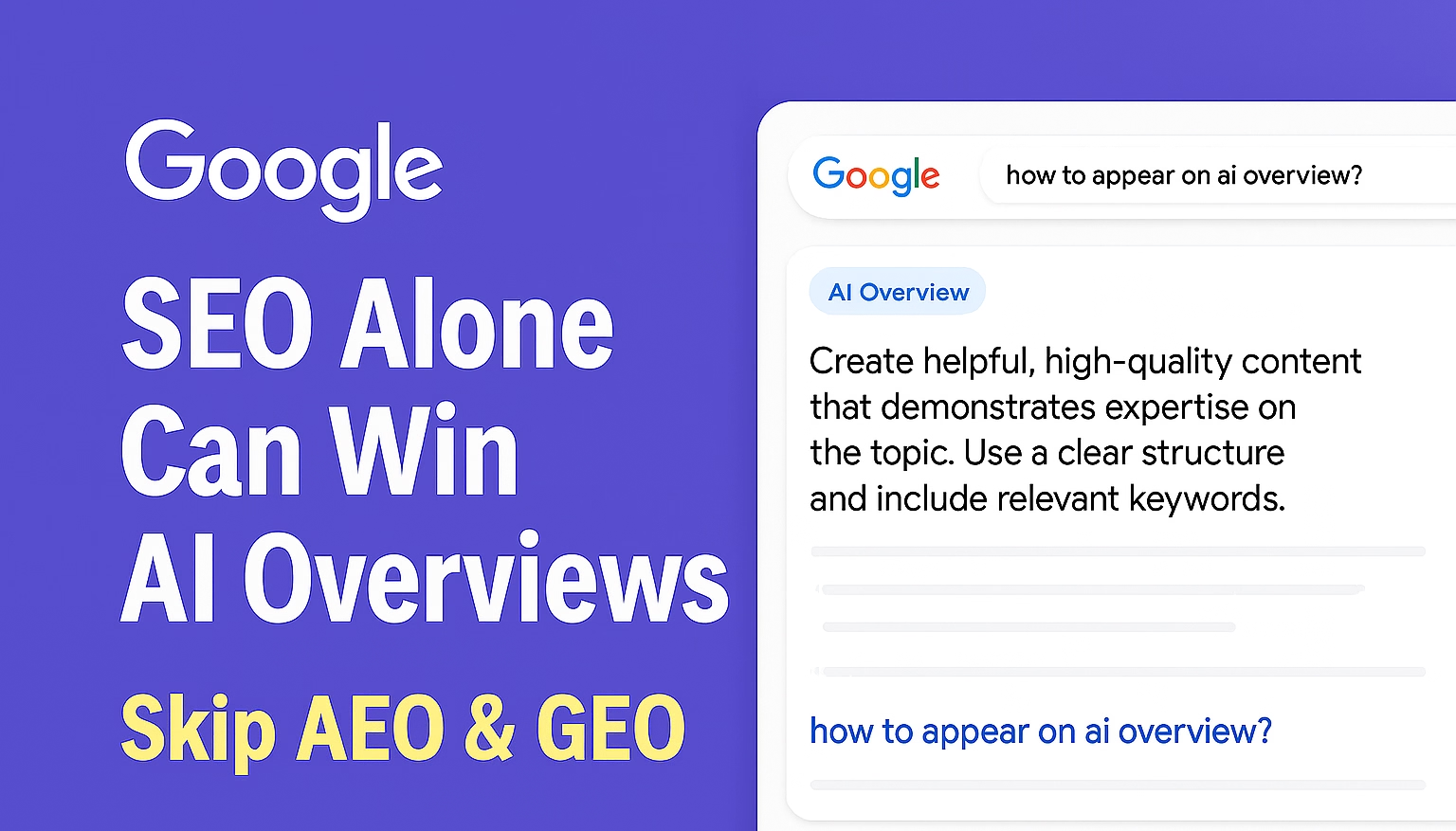
At Search Central Live Asia Pacific – Bangkok 2025, Google representatives reaffirmed that AI-driven features like AI Overviews, Lens, Circle to Search, and AI Mode use the same underlying infrastructure—crawlers, indexing pipelines, and ranking systems—as traditional search. In short: “AI Search Optimization = SEO.”
Gary Illyes spelled it out plainly: There is no separate requirement for AEO (Answer Engine Optimization) or GEO (Generative Engine Optimization). Traditional SEO alone is more than enough to get your content into AI Overviews.
He also clarified that Google doesn’t try to detect whether content is AI-generated or human-written—quality is what matters most.
What Exactly Are AEO and GEO Anyway?
AEO (Answer Engine Optimization)
Focuses on structuring content—like FAQs, definitions, and clear Q&A formats—with the aim of appearing in featured snippets, voice answers, or AI Overviews. It emphasizes conversational phrasing, structured data, and EEAT signals.
GEO (Generative Engine Optimization)
Aims to increase your chances of being cited or included in generative AI responses (e.g., from ChatGPT, Gemini, Perplexity). It typically involves content that is context-rich, citation-ready, and structured for AI retrieval. Some discussions even mention using llms.txt files for this purpose.
Why These Matter to Some Marketers
As AI-powered responses and zero-click traffic grow, some marketers argue for dedicated AEO/GEO tactics to win visibility in these environments. Tools and start-ups are emerging to support such strategies.
But Google Says: Stick to SEO
Despite industry hype around AEO/GEO, Google endorses a single, unified SEO framework for both traditional and AI-driven search rankings.
Same Index, Same Signals
AI features are layered on top of existing search architecture—they do not have separate ranking criteria.
Quality Over Format
Whether AI or human wrote it is irrelevant—Google’s systems prioritize quality, clarity, relevance, and authority.
No Need to Reinvent the Wheel
Core SEO best practices—technical health, structured content, EEAT, internal linking, optimized metadata—remain your best toolkit.
SEO vs AEO vs GEO — Clear Comparison
| Strategy | Primary Goal | Key Methods | When It Matters |
|---|---|---|---|
| SEO | Rank in traditional SERPs | Keywords, backlinks, UX, metadata, structure | Always; foundational for visibility |
| AEO | Be the direct answer in AI interfaces | Q&A format, structured data, clear authority | Useful for snippet/AO visibility |
| GEO | Get cited in generative AI outputs | Citation-ready, in-depth, context-rich content | Emerging; relevance grows with AI adoption |
FAQ – People Also Ask
Do I need to optimize for AEO or GEO?
No, Google maintains that a strong SEO foundation is sufficient for AI Overview visibility.
How do AI Overviews work?
AI Overviews generate summaries using machine learning, pulling from web content and providing in-line links to authoritative sources.
Should I still use structured data and FAQs?
Yes, structured content improves clarity, readability, and quality—all of which benefit SEO and may help AI understand and reference your content.
Does GEO mean preparing for llms.txt and metadata?
Yes, if you choose to, GEO includes using metadata and files like llms.txt to aid AI systems in citing your content. But Google has not endorsed the need for these strategies.
Will traditional SEO decline with AI?
There’s concern about traffic shifts as AI summaries reduce clicks, but SEO remains essential. Some forecasts see a decline in organic traffic—but not a replacement for SEO.
Final Thoughts & SEO Action Plan
Emphasize SEO Fundamentals
- Mobile-first, fast loading, technical crawlability
- Keyword-rich yet natural content
- Strong EEAT signals (author bios, citations)
- Clean structure—subheadings, bullets, FAQs
Enhance for AI Interfaces Without Diverting Focus
- Use FAQ and clear answer formats, but grounded in SEO
- Build topical clusters—supports both user and AI discovery
- Ensure internal links and top navigation highlight key pages
Monitor Performance Across Experiences
Use Google Search Console to track AI Overview impressions and rankings. Adjust based on insights—not buzzwords.





Leave a Reply